
Building a website is an important step for any business, but simply having a website does not mean people will automatically find it. Every day, thousands of websites compete for attention in search engines. If your website does not appear when people search for the products or services you offer, you may miss valuable opportunities.
This is where SEO services come into the picture.
Search Engine Optimization helps improve the visibility of a website in search results. It involves many different activities, from improving website content to fixing technical problems and making the site easier for both visitors and search engines to understand.
One part of SEO that is sometimes overlooked is technical SEO. While visitors may not notice technical SEO directly, it can have a major effect on how a website is crawled, indexed, and experienced.
In this guide, we will look at SEO services and technical SEO in simple terms. We will also discuss some practical steps that can help improve the overall health and visibility of a website.
What Are SEO Services?
SEO services are the different activities used to improve a website’s presence in search engines.
These services can include keyword research, content optimization, technical SEO, internal linking, website performance improvements, local SEO, and other strategies that support organic search visibility.
The purpose is not simply to bring as much traffic as possible. What really matters is attracting people who are interested in your business and may actually need your products or services.
For example, someone searching for web development services may already be looking for a company that can build a website. If your website provides useful information and appears for that search, that visitor could become a potential customer.

Why Do Businesses Need SEO Services?
Think about how you normally find a new business, product, or service online. In many cases, you start by typing a question or a few words into Google.
Your potential customers do the same thing.
If your website has good visibility for searches related to your business, people have a better chance of discovering you.
SEO can help a business:
- Bring more relevant organic visitors
- Improve visibility in search results
- Reach people who are actively searching
- Generate potential leads
- Build a stronger online presence
- Improve the overall website experience
- Create a foundation for long-term growth
SEO is not normally an overnight process. It takes time, testing, improvement, and consistency. The results can also vary depending on the industry, competition, website condition, and quality of the work being done.
What Is Technical SEO?
Technical SEO is the part of SEO that deals with the technical foundation of a website.
Its main purpose is to make it easier for search engines to crawl and understand your website and to ensure that important pages can be properly accessed and indexed.
Technical SEO is not mainly about writing blog posts or building backlinks. Instead, it focuses on things happening behind the scenes.
Some common technical SEO areas include:
- Crawling and indexing
- Website speed
- Mobile usability
- HTTPS security
- XML sitemaps
- Robots.txt
- Canonical URLs
- Broken links
- Redirects
- Structured data
- Core Web Vitals
- Website structure
A website can have excellent content, but if important pages cannot be properly accessed or indexed, that content may not get the visibility it deserves.
Technical SEO vs. On-Page SEO
Technical SEO and on-page SEO are closely related, but they are not the same thing.
On-page SEO mainly deals with the content and elements found on individual pages. This includes headings, page titles, meta descriptions, keywords, images, and the way information is organized.
Technical SEO, on the other hand, looks more closely at the technical side of the website.
For example, writing a helpful article about SEO is part of on-page SEO. Making sure Google can crawl and index that article correctly is a technical SEO concern.
Both areas are important. Good content needs a healthy technical foundation to perform properly.
Why Is Technical SEO Important?
Imagine spending hours creating a detailed article for your website. The information is useful, the writing is good, and the page looks professional.
But what happens if search engines cannot properly access or index the page?
The content may not receive the visibility you expected.
This is one reason technical SEO matters. It helps ensure that the basic structure of your website is working properly.
Technical improvements can also make a website more comfortable to use. Visitors generally prefer websites that load quickly, work well on mobile devices, use secure connections, and have simple navigation.
Technical SEO Helps Search Engines Understand Your Website
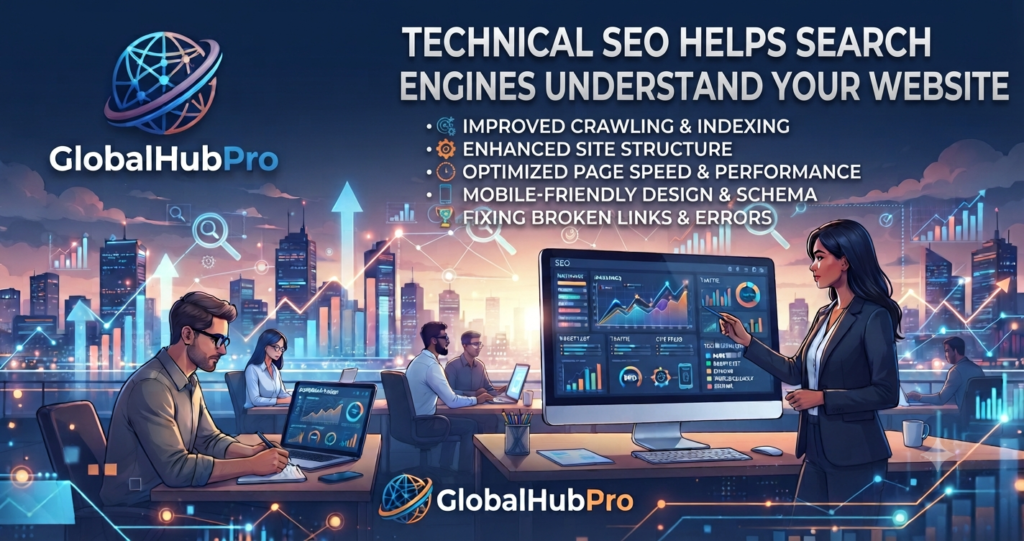
Search engines need to understand not only individual pages but also the relationship between different pages on a website.
A logical website structure can make this easier.
Clear navigation, useful internal links, descriptive URLs, appropriate headings, XML sitemaps, and properly implemented structured data can all contribute to a website that is easier to understand.
Important Technical SEO Factors
Technical SEO covers a number of different areas. You do not necessarily need to change everything at once. A good approach is to identify the problems that matter most and work through them one by one.
1. Website Crawling and Indexing
Search engines use automated crawlers to discover pages on websites.
Once a page is discovered, search engines may process and index it so that it can potentially appear in search results.
If an important page is accidentally blocked or has an indexing problem, it may not appear as expected.
For that reason, regularly checking your important pages is a useful part of website maintenance.
You should make sure that important pages are:
- Accessible to search engines
- Properly indexed
- Connected through relevant internal links
- Free from major technical errors
Google Search Console is a useful tool for checking indexing and understanding how your website is performing in Google Search.
2. XML Sitemap
An XML sitemap is a file that lists important URLs on a website.
It gives search engines another way to discover pages, which can be particularly useful for newer websites or websites with many pages.
If you are using WordPress, SEO plugins such as Yoast SEO or Rank Math can generate an XML sitemap for you.
Still, a sitemap is not a substitute for good website structure. Your pages should also be useful, accessible, and linked properly.
3. Robots.txt
The robots.txt file gives instructions to search engine crawlers about areas they should or should not crawl.
This file needs to be configured carefully.
A small mistake can sometimes prevent search engines from accessing pages that you actually want them to find.
If you are not familiar with robots.txt, it is better to understand what a change does before making it.
4. Website Speed and Performance
Nobody likes waiting for a website to load.
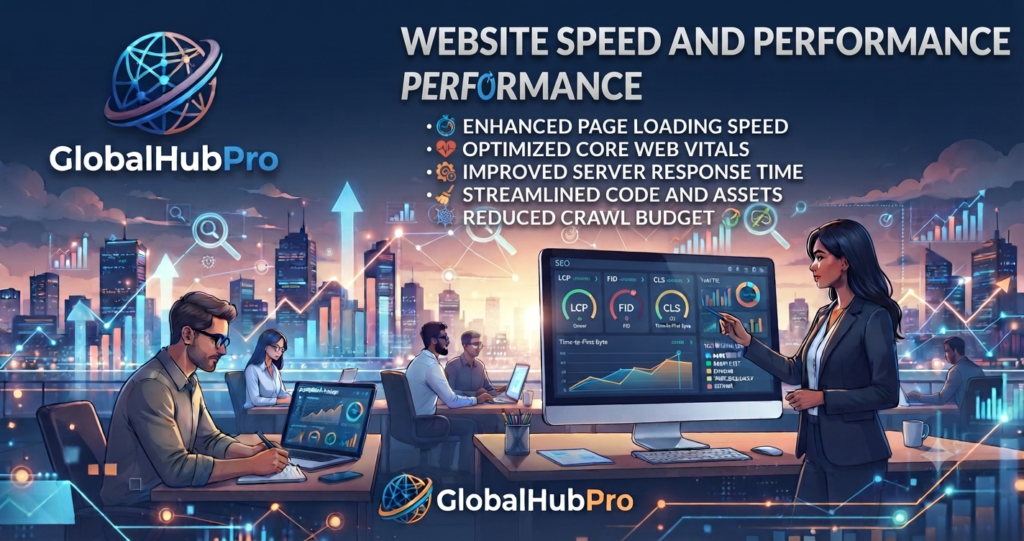
A slow website can make visitors leave before they have a chance to read your content, explore your services, or contact your business.
Website performance can be improved in several ways, including:
- Compressing large images
- Using suitable image formats
- Removing unnecessary plugins
- Optimizing CSS and JavaScript
- Using caching
- Choosing reliable hosting
- Using a CDN when it makes sense
The right solution depends on the website. Before making changes, it is helpful to identify what is actually causing the slowdown.

5. Mobile-Friendly Website
Today, many visitors browse websites from smartphones.
That means your website should not only look good on a desktop computer. It should also be comfortable to use on smaller screens.
A mobile-friendly website should have readable text, simple navigation, properly sized buttons, responsive layouts, and images that fit the screen.
A visitor should not have to zoom in and out or scroll sideways just to read a page.
6. HTTPS Security
HTTPS protects the connection between a visitor’s browser and your website.
A website using HTTPS normally has an SSL/TLS certificate and begins with https://.
For a business website, having HTTPS is an important part of creating a secure and trustworthy online experience.
7. Fix Broken Links
Broken links are another common website problem.
For example, you may have an internal link pointing to a page that was deleted or moved. When someone clicks it, they may receive a 404 error.
A few broken links may happen naturally as a website grows, but regularly checking important links can help keep the site organized and user-friendly.
8. Canonical URLs
Sometimes a website can have different URLs that show very similar or duplicate content.
A canonical URL can be used to indicate the preferred version of a page.
This can be useful when a website has URL variations, parameters, or other situations where similar versions of a page exist.
Canonical settings should be used carefully and should match the actual structure of the website.
9. Structured Data
Structured data provides search engines with additional information about the content of a webpage.
Depending on the type of page, structured data can describe things such as articles, products, organizations, or local businesses.
When correctly implemented and when a page is eligible, structured data may help search engines understand the content and can make the page eligible for certain enhanced search appearances.
It is important to remember that structured data itself does not guarantee a special search result.
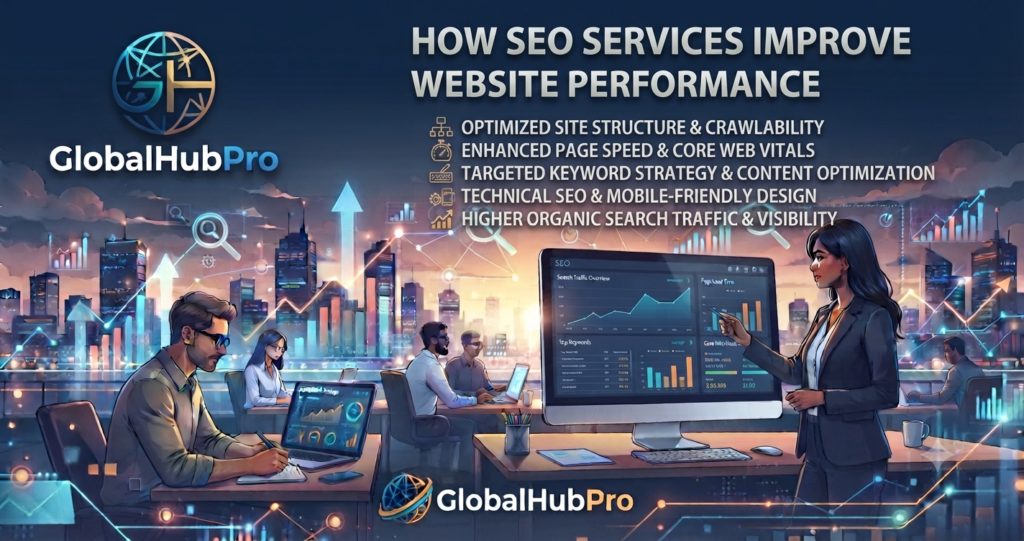
How SEO Services Improve Website Performance
A proper SEO process normally starts with understanding the website and the business behind it.
An SEO professional or agency may first look at the current website, target audience, important services, competitors, existing content, and technical condition.
From there, an SEO plan can be created.
This may include a technical audit, keyword research, content improvements, on-page SEO, internal linking, performance optimization, and regular monitoring.
SEO Audit
An SEO audit is basically a health check for a website.
It can help identify issues that may be preventing the website from performing as well as it could.
An audit may look at:
- Indexing
- Crawlability
- Page titles
- Meta descriptions
- Headings
- Internal links
- Broken links
- Website speed
- Mobile usability
- Image optimization
- Duplicate or low-value content
The important thing is what happens after the audit. A long list of problems is not very useful unless those problems are understood and prioritized.
Keyword Research
Keyword research helps you understand what people actually search for.
For a business website, choosing keywords should not be based only on search volume. Relevance and search intent are equally important.
For example, a company offering website development should focus on searches related to website development rather than trying to rank for every popular technology keyword.
Good keyword research considers:
- Search intent
- Relevance to the business
- Competition
- Potential business value
- Related topics
The goal is to create useful pages that answer the questions and needs of the target audience.

Content Optimization
SEO and content go hand in hand.
A technically perfect website still needs useful information if it wants to attract and satisfy visitors.
Good SEO content should be:
- Helpful
- Original
- Easy to read
- Well organized
- Relevant to the topic
- Written for the intended audience
Keywords can be included naturally where they make sense. There is no need to repeat the same phrase in every paragraph.
If a sentence sounds unnatural simply because a keyword has been inserted into it, the content probably needs to be rewritten.
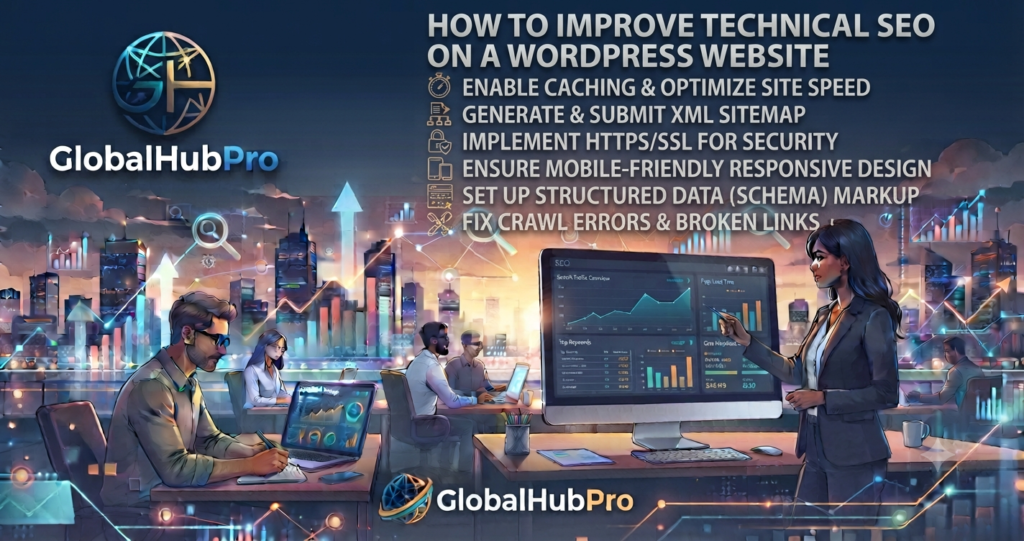
How to Improve Technical SEO on a WordPress Website
WordPress provides many tools that can make SEO management easier, but the website still needs proper setup and regular maintenance.
Keep WordPress and Plugins Updated
Keeping WordPress, themes, and plugins updated can help with security, compatibility, and performance.
Before making major changes, keep a recent backup of your website. This gives you something to fall back on if an update creates an unexpected problem.
Use an SEO Plugin Carefully
SEO plugins such as Yoast SEO and Rank Math provide useful features for WordPress websites.
Depending on the plugin and configuration, you can manage things such as:
- SEO titles
- Meta descriptions
- XML sitemaps
- Canonical URLs
- Schema settings
- Social sharing information
However, installing an SEO plugin does not automatically make a website rank higher.
It is a tool. The quality of the website, content, technical setup, and overall SEO work still matter.
Optimize Images
Images are important for a modern website, but very large image files can slow down pages.
Before uploading an image, try to use a suitable size and format. WebP can be a useful option where appropriate.
Also remember to add descriptive alt text to meaningful images. Alt text should explain what the image shows rather than being used as a place to insert unnecessary keywords.
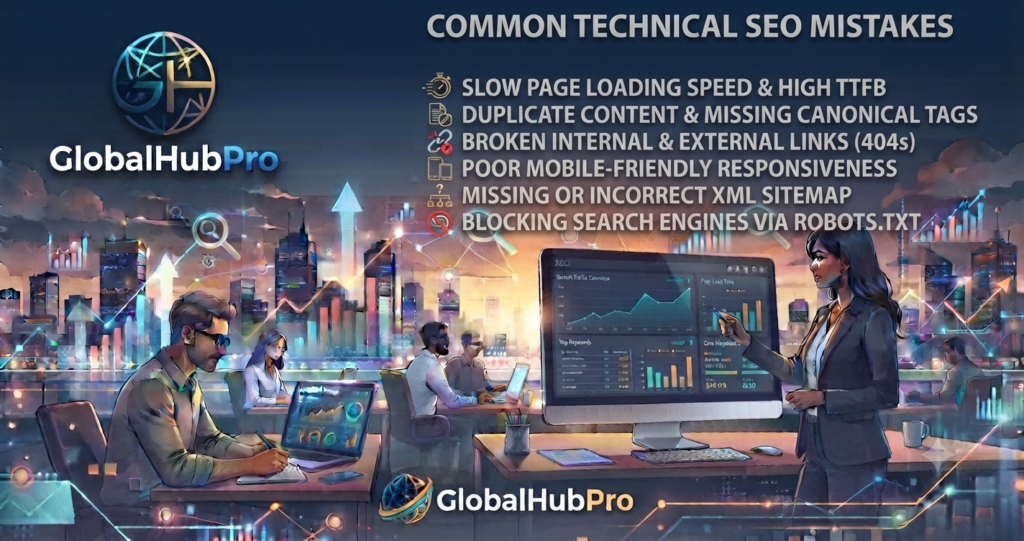
Common Technical SEO Mistakes
Even websites that have been online for years can have basic SEO problems.
Blocking Important Pages
An incorrect robots.txt setting or other configuration can prevent search engines from accessing pages that should be available.
Ignoring Mobile Users
A website that works well only on desktop computers can provide a frustrating experience for mobile visitors.
Installing Too Many Plugins
WordPress plugins are useful, but installing plugins simply because they offer an SEO feature is not always a good idea.
Unnecessary plugins can add complexity and may affect performance, maintenance, or security.
Ignoring Broken Links
Old links can remain on a website after pages are removed or URLs are changed.
Checking important internal links from time to time can prevent unnecessary 404 errors.
Focusing Only on Keywords
SEO is much bigger than keywords.
A website also needs useful content, a sensible structure, good technical accessibility, internal links, and a positive experience for visitors.
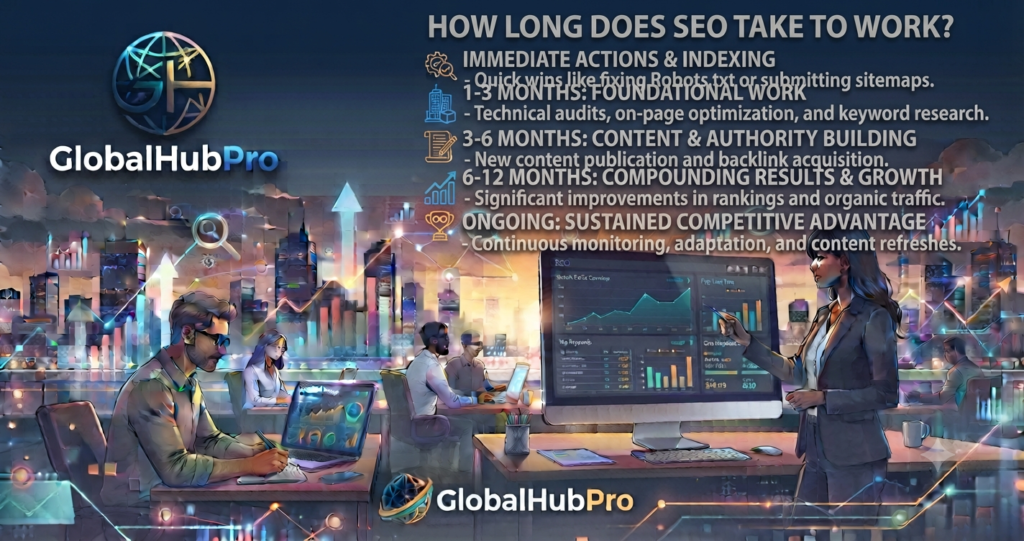
How Long Does SEO Take to Work?
One of the most common questions businesses ask is, “How long will SEO take?”
There is no single answer.
The timeline can depend on the website’s current condition, competition, industry, content quality, technical issues, search demand, and how consistently SEO improvements are made.
Some technical changes may produce noticeable improvements sooner, while organic search growth often takes considerably more time.
Instead of expecting an immediate result, it is better to monitor the website regularly and make decisions based on actual performance data.
How to Measure SEO Results
SEO should be measured using meaningful data rather than simply looking at one keyword position.
Some useful indicators include:
- Organic traffic
- Search impressions
- Search clicks
- Click-through rate
- Search visibility
- Indexed pages
- Leads
- Conversions
- Engagement on important pages
Google Search Console can help website owners understand how their pages appear in Google Search.
Analytics tools can then provide additional information about what visitors do after arriving on the website.
Together, these insights can help you understand which areas are working and where further improvement may be needed.
SEO Services and Technical SEO Work Together
SEO is not one single activity.
A website may have excellent content but poor technical performance. Another website may have a strong technical foundation but very little useful content.
A balanced SEO strategy brings these different areas together.
Technical SEO provides the foundation. On-page SEO helps individual pages become useful and relevant. Content helps answer users’ questions, while appropriate off-page activities can support a website’s visibility and reputation.
The key is to work on these areas naturally rather than looking for shortcuts.

Final Thoughts
SEO is an ongoing process. A website does not become successful in search engines simply because a few keywords have been added to its pages.
A healthy technical foundation, useful content, clear navigation, relevant internal links, good website performance, and regular improvements all have a role to play.
Technical SEO is especially important because it helps search engines access, understand, and process the important parts of your website.
Whether you are starting a new website or trying to improve an existing one, taking care of SEO from the beginning can save you from many problems later.
At GlobalHubPro, we work with businesses that want to improve their online presence through practical digital solutions, including SEO, technical SEO, content writing, guest posting, and web development.
If your website needs an SEO audit, technical improvements, or a complete SEO strategy, you can contact GlobalHubPro and discuss what your business needs.