
If you want detailed information on “What is SEO?”, then you should definitely read this article.
Every blogger wants the blog posts they write to be read by as many people as possible and to attract a lot of traffic, thereby increasing their income.
But the question arises: where will this high volume of traffic come from?
The answer is—search search engine. After all, 90%.. of people use search engines to find anything on the internet, and Google is the most widely used among them.
Now, just imagine you have published content on your blog or website. If someone searches for information related to that content on Google and your website’s link appears at the very top of the results page, what happens?
Naturally, people will click on it… and traffic to your blog will increase.es.
But the question remains: how exactly will this be done?
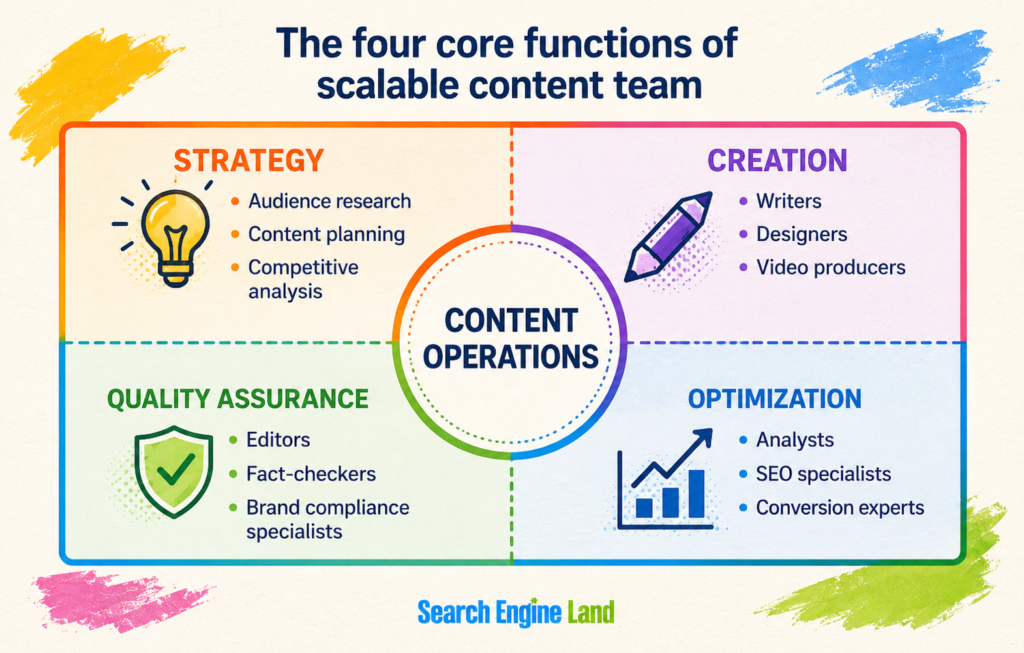
There are two ways to go about this,Types of SEO
Search Engine Marketing (SEM)
Search Engine Optimization (SEO)
While SEM refers to paid marketing—where we can run advertisements by paying Google—SEO is a method that allows us to generate organic traffic without paying Google.
In this article, we will focus solely on SEO and explore in detail exactly what it is.
Before learning about Search Engine Optimization, you should understand how search engines work; for this, be sure to read our detailed article: “What is a search engine? What are the different types? How does it work?”

The full form of SEO is “Search Engine Optimization.” It is a technique that allows us to optimize the content of a website or blog to rank at the top position on search engines for a specific keyword.
SEO is a process through which we can optimize the content of a website or blog to secure a top spot on search engine results pages, thereby attracting the maximum number of visitors.
Getting a blog or website onto the first page of Google’s SERP (Search Engine Results Page) requires attention to various factors and a significant amount of hard work.
For a new blogger, this process takes time, so patience is also essential.
Every blogger strives to have their blog post appear on the first page of Google. This is because most people prefer to visit websites that show up on that first page.
Why is it important to rank on the first page of Google?
According to research, approximately 94% of clicks go to results on Google’s first page.
Consequently, every business aims to appear on the first page of the SERP to get ahead of its competitors. That is why it is essential to understand what SEO is.
Why is SEO important? and Types of SEO
If you blog, you are likely aware that hundreds of thousands of blog posts are published on the internet every day; however, only a few manage to rank at the top of search engines.
This is because search engine algorithms—like Google’s—evaluate numerous factors before determining which post will rank for a specific keyword and at what position it will appear.
Google consistently aims to display high-quality content on the first page, and several ranking factors—or rules—have been established to achieve this.
It is through Search Engine Optimization that we are able to adhere to these very rules.
Let’s assume you are writing a post titled “What is search engine optimization?” Now, try searching for it on Google…
You can see that information related to that keyword is already available on 247,000,000 pages. Now, if you want to surpass all of them and reach the top, this is not possible without SEO.
Yes, you can write articles on keywords with no competition; however, if your article isn’t SEO-optimized, someone else could eventually write a post on the same topic and surpass you. That is why understanding SEO and utilizing SEO techniques is crucial.
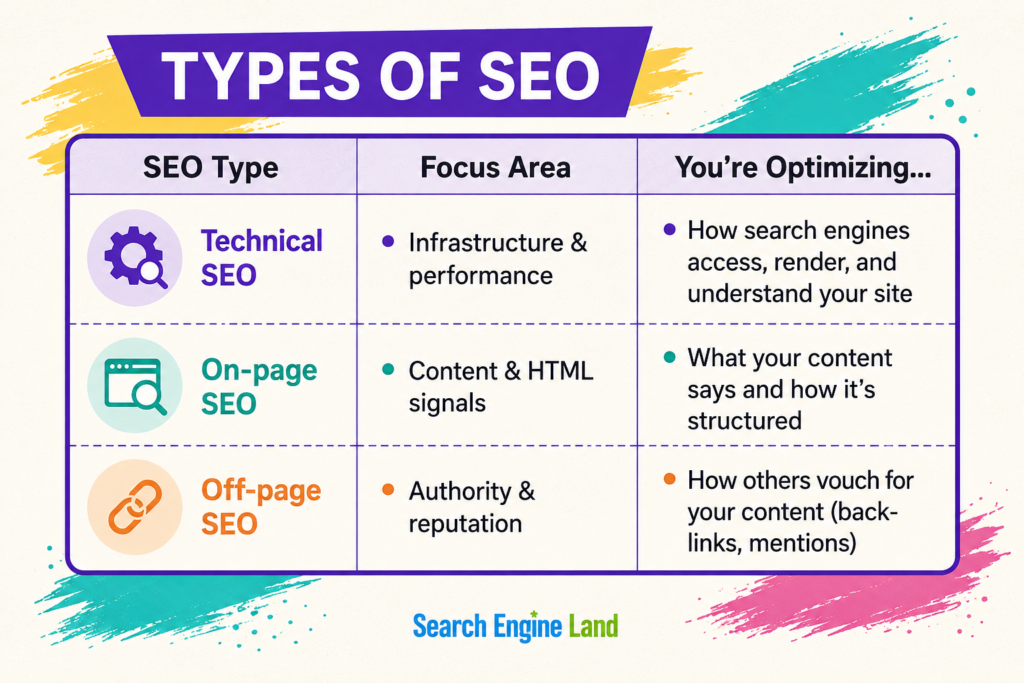
How does SEO work?
You have already gained basic knowledge about what SEO is; now, you might be wondering how it actually works. To understand this, we need to look at search engines and determine what kind of content they display at the top positions of the SERP (Search Engine Results Page).
In essence, the goal of Google and other search engines is to provide their users with the most accurate and relevant information.
To achieve this, they search for websites related to that information and assign rankings based on quality and credibility using their algorithms.
Through SEO techniques, our aim is to improve the quality and credibility of our website.
What is On-Page SEO?
In On-Page SEO, we optimize the content of our website or blog.
This is a common method used to optimize blog posts.
To do this, we primarily need to perform three tasks:
Keyword Research
Content Creation
Keyword Optimization
Conducting keyword research
Whenever we write an article for our blog, we first look for keywords that are frequently searched on Google and offer the potential to rank well.
This step is essential because if we write an article without conducting keyword research, the chances of it ranking are very low.
There are several tools used for keyword research, such as:
Google Keyword Planner
Ahref
SEMrush
Ubersuggest etc.
With the help of these tools, you can check the traffic and competition for any keyword. Although they are not 100% accurate, they certainly provide a good estimate.
To learn more about keywords, be sure to read this: What is a Keyword? [Its use in SEO]
Once you have identified your target keyword, the next step is to create content—that is, to write the post. You must pay attention to quality during content creation; include only the material that your audience wants to read.
Performing keyword optimization
In this step, we need to place our target keywords in the right locations so that our content becomes optimized for them. This involves correctly incorporating keywords into elements such as the title, headings, tags, and URL structure.
For more information on this, read: What is On-Page SEO? How to do it? [15 Methods]
What is Off-Page SEO?
As the name suggests, this involves using SEO techniques that provide external support to boost our website’s ranking.
In other words, with off-page SEO, we do not need to make any changes to the website itself.
Here, we undertake certain activities to boost our website’s authority and reputation. These include:
Building backlinks: Obtaining links from other websites.
Social media sharing: Sharing links to our posts on social media platforms, etc.
There are various methods for building backlinks, such as guest posting and social bookmarking. When creating backlinks, we must always ensure that the target site is of high quality; otherwise, it could have a negative impact.
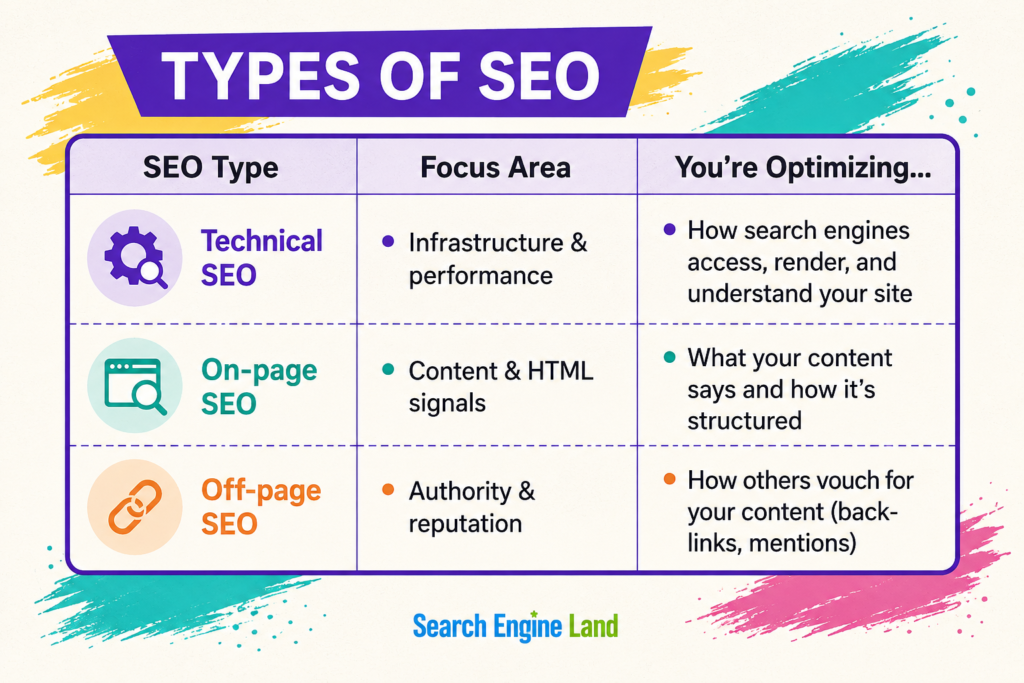
What is Technical SEO?
Your website looks good and features quality content, yet you may still need to optimize it.
In Technical SEO, we work on the site’s backend and aim to improve the user experience (UX). To achieve this, we need to focus on the following aspects:
Page Speed: Your blog or website should have a good loading speed; otherwise, users may leave your site for another, sending a negative signal to Google that could lower your rankings. You can check your site’s speed using Google PageSpeed Insights.
Mobile-Friendly Site: Your site should display correctly on mobile devices; to ensure this, you should use a responsive website theme.
Use HTTPS: This is a secure protocol. By default, sites run on HTTP, which is not secure. To use HTTPS, you need to install an SSL certificate. You can read more about this in our article titled “What is HTTPS?”
Robots.txt File: This is a type of file containing code that instructs search engines on which pages to crawl and which ones to avoid. It requires careful attention.
So, these are some of the points that need to be considered in technical SEO.
Conclusion – What is SEO?
By now, you must have understood what Types of SEO is. If you own a website or are a blogger and want to drive free traffic to your site from search engines, learning SEO is essential. Nowadays, major companies spend significant amounts of money on SEO experts and digital marketing to boost their websites’ search rankings. If you wish to pursue a career in digital marketing, you will need to master all these techniques in detail.